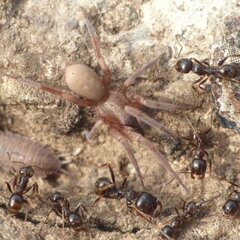
elleelle Posted August 22, 2019 Report Share Posted August 22, 2019 Santa Teresa Gallura (OT), varie date Questo Reduviidae notturno, Sastrapada baerensprungli, che frequenta i bordi erbosi dei sentieri,. sembra particolarmente abile nel catturare una piccola specie di Pardosa che frequenta lo stesso ambiente. In due osservazioni in notti diverse ne ho osservati 5 con preda. 4 prede su 5 erano Pardosa (non arrivo alla specie, ma allego la foto di un individuo sano). Link to comment Share on other sites More sharing options...
Gaborri Posted August 23, 2019 Report Share Posted August 23, 2019 Secondo te è perchè i Lycosidae sono generalmente più mobili? Link to comment Share on other sites More sharing options...
elleelle Posted August 23, 2019 Author Report Share Posted August 23, 2019 Può essere. Può darsi che Pardosa, per cacciare, si arrampichi su e giù sui fili d'erba e Sastrapada l'aspetti al varco. Potrebbe essere effettivamente una questione di probabilità di incontro. A dire la verità, però, non sono sicuro che quella specie di Pardosa cacci attivamente di notte. Di solito le trovo ferme. Resta il fatto che afferrare un Lycosidae e riuscire a pungerlo con facilità evitando ritorsioni non è scontato, visto anche il rapporto di dimensioni tra i due. Link to comment Share on other sites More sharing options...
Recommended Posts
Create an account or sign in to comment
You need to be a member in order to leave a comment
Create an account
Sign up for a new account in our community. It's easy!
Register a new accountSign in
Already have an account? Sign in here.
Sign In Now